
Highlights in carbon science
Selection of recent new findings and data synthesis that are contributing to the advancement in carbon sciences and the analysis of the carbon-climate-human feedback.
Articles and data |
|
|---|---|
 |
Permafrost Region Greenhouse Gas Budgets Suggest a Weak CO2 Sink and CH4 and N2O Sources, But Magnitudes Differ Between Top-Down and Bottom-Up Methods and The Net GHG Balance and Budget of the Permafrost Region (2000-2020) From Ecosystem Flux Upscaling |
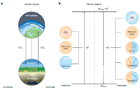 |
Net-zero approaches must consider Earth system impacts to achieve climate goals Commitments to net-zero targets now cover 88% of countries' emissions. Underlying the accounting behind net-zero frameworks is the assumption that emissions can be balanced with removals such that their net climate effect is zero. However, there are reasons to expect that the two are not equivalent. |
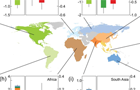 |
Empirical estimates of regional carbon budgets imply reduced global soil heterotrophic respiration Resolving regional carbon budgets is critical for informing land-based mitigation policy. For nine regions covering nearly the whole globe, we collected inventory estimates of carbon-stock changes complemented by satellite estimates of biomass changes where inventory data are missing. |
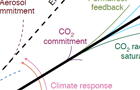 |
Opportunities and challenges in using remaining carbon budgets to guide climate policy The remaining carbon budget represents the total amount of CO2 that can still be emitted in the future while limiting global warming to a given temperature target. Carbon budget estimates range widely however, and this uncertainty can be used to either characterize the most ambitious mitigation targets as impossible, or to argue that there is ample time to transition to a low-carbon economy. |
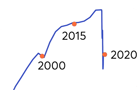 |
Temporary reduction in daily global CO2 emissions during the COVID-19 forced confinement Government policies during the COVID-19 pandemic have drastically altered patterns of energy demand around the world. Many international borders were closed and populations were confined to their homes, which reduced transport and consumption patterns. Here we compile government policies and activity data to estimate the decrease in CO2 emissions during forced confinements. |
 |
Methane removal and atmospheric restoration Zeolites and other technologies should be evaluated and pursued for reducing methane concentrations in the atmosphere from 1,860 ppb to preindustrial levels of ~750 ppb. Such a goal of atmospheric restoration provides a positive framework for change at a time when climate action is desperately needed. |
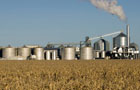 |
Focus on Negative Emissions Scenarios and Technologies The latest IPCC Assessment Report (AR5) concludes that achieving climate stabilization at safe levels (i.e., below 2°C) will require sustained emission reductions, leading to near-zero or negative emissions (NE) towards the end of this century. During the past decade, however, emissions from fossil fuel combustion and cement production have continued to rise. Emissions in 2013 reached 10 Pg C year-1, a 61% increase compared to the 1990 value. |
 |
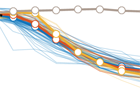
Historical greenhouse gas concentrations for climate modelling (CMIP6) Atmospheric greenhouse gas (GHG) concentrations are at unprecedented, record-high levels compared to the last 800000 years. An accurate representation of GHG concentrations is hence important to understand and model recent climate change. Here, we provide consolidated datasets of historical atmospheric concentrations (mole fractions) of 43 GHGs to be used in the Climate Model Intercomparison Project – Phase 6 (CMIP6) experiments. |
 |
Key indicators to track current progress and future ambition of the Paris Agreement Details are missing on how to track progress towards the 'Paris goal', inform the five-yearly 'global stocktake', and increase the ambition of Nationally Determined Contributions (NDCs). We develop a nested structure of key indicators to track progress through time. |
 |
Urban infrastructure choices structure climate solutions Cities are becoming increasingly important in combatting climate change, but their overall role in global solution pathways remains unclear. Here we suggest structuring urban climate solutions along the use of existing and newly built infrastructures, providing estimates of the mitigation potential. |
 |
Substantial global carbon uptake by cement carbonation Considerable attention has been paid to quantifying CO2 emissions from cement production, but the natural reversal of the process—carbonation—has received little attention in carbon cycle studies. It is estimated that a cumulative amount of 4.5 GtC has been sequestered in carbonating cement materials from 1930 to 2013, offsetting 43% of the CO2 emissions from production of cement over the same period, not including emissions associated with fossil use during cement production |
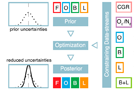 |
Reducing uncertainties in decadal variability of the global carbon budget with multiple datasets Conventional calculations of the global carbon budget infer the land sink as a residual between emissions, atmospheric accumulation, and the ocean sink. Here, we present a Bayesian fusion approach that combines multiple observations in different carbon reservoirs to optimize the land and ocean carbon sinks, land use change emissions, and indirectly fossil fuel emissions. |
 |
Simulating the Earth system response to negative emissions An important issue in developing carbon budgets to achieve climate stabilisation targets is the behaviour of natural carbon sinks, particularly under low emissions mitigation scenarios as required to meet the goals of the Paris Agreement. A key requirement for low carbon pathways is to quantify the effectiveness of negative emissions technologies which carbon cycle feedbacks will affect strongly. |
 |
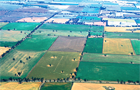
Greening of the Earth and its drivers Global environmental change is rapidly altering the dynamics of terrestrial vegetation, with consequences for the functioning of the Earth system and provision of ecosystem services. Yet how global vegetation is responding to the changing environment is not well established. Here we use three long-term satellite leaf area index (LAI) records and ten global ecosystem models to investigate four key drivers of LAI trends during 1982–2009. |
 |
Land is a greenhouse gas source The net biogenic greenhouse gas balance resulting from anthropogenic activities and its effect on the climate system remains uncertain. Here we use bottom-up and top-down approaches to quantify the global net biogenic greenhouse gas balance between 1981 and 2010 resulting from anthropogenic activities and its effect on the climate system. |
 |
Asia Carbon Budget Asia is an important region for the global carbon budget, with 4 of the world's 10 largest national emitters of CO2. Using an ensemble of seven atmospheric inverse systems, we estimated land biosphere fluxes based on atmospheric observations of CO2 concentration. |
 |
Arid regions & CO2 While sink strength is dominated by highly productive lands (mainly tropical forests), the trend and interannual variability of the sink are dominated by semi-arid ecosystems. |
 |
C sink trends The land and ocean absorb on average just over half of the anthropogenic emissions of carbon dioxide (CO2) every year. These CO2 "sinks" are modulated by climate change and variability. Here we use a suite of nine dynamic global vegetation models (DGVMs) and four ocean biogeochemical general circulation models (OBGCMs) to estimate trends driven by global and regional climate and atmospheric CO2 in land and oceanic CO2 exchanges with the atmosphere over the period 1990–2009, to attribute these trends to underlying processes in the models, and to quantify the uncertainty and level of inter-model agreement. |
 |
Weaker Greening Above 30°N, the strength of the relationship between the interannual variability of growing season NDVI and temperature declined substantially between 1982 and 2011. This decrease is mainly observed in temperate and arctic ecosystems; drought being the cause in temperate regions. |
 |
Carbon and other biogeochemical cycles Chapter 6 of Working Group I "The Physical Science Basis" of the Fifth Assessment Report of the Intergovernmental Panel on Climate Change. |
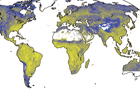 |
Carbon turnover times in terrestrial ecosystems Whole-ecosystem carbon turnover times that combines new estimates of vegetation and soil organic carbon stocks and fluxes. Mean global carbon turnover time is 23 years. |
 |
Semi-arid ecosystems emerging role in global carbon cycle dynamics |
 |
Asymmetric effects of daytime and night-time warming on Northern Hemisphere vegetation |
 |
Enhanced Seasonal Exchange of CO2 by Northern Ecosystems Since 1960 |
 |
First Signs of Carbon Sink Saturation in European Forest Biomass |
 |
Climate Extremes and the Carbon Cycle |
 |
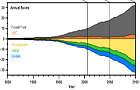
Variations in Atmospheric CO2 Growth Rates Coupled with Tropical Temperature There is strong and persistent coupling between interannual variations of the CO2 growth rate and tropical land–surface air temperature during 1959 to 2011, with a 1 °C tropical temperature anomaly leading to a 3.5 ± 0.6 Petagrams of carbon per year (PgC/y) CO2 growth-rate anomaly on average. |
 |
Attributing the Increase of Atmospheric CO2 to Emitters and Absorbers Climate change policies need to consider the contribution of each emitting region to the increase in atmospheric carbon dioxide (CO2), which includes both their CO2 emissions and sinks. The study unambiguously attribute the largest share of the historical increase of CO2 between pre-industrial times to developed countries. However, the excess CO2 attributed to developing countries is greater than their share of cumulative CO2 emissions, because a greater fraction of their emissions occurred more recently. |
 |
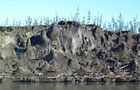
Anthropogenic Perturbation of the Carbon Fluxes from Land to Ocean A substantial amount of the atmospheric carbon taken up on land through photosynthesis and chemical weathering is transported laterally along the aquatic continuum from upland terrestrial ecosystems to the ocean. We show that anthropogenic perturbation may have increased the flux of carbon to inland waters by as much as 1.0 Pg C yr-1 since pre-industrial times, mainly owing to enhanced carbon export from soils. |
 |
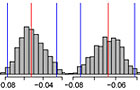
Expert Assessment of Vulnerability of Permafrost Carbon to Climate Change The overall amount, rate, and form of C released to the atmosphere in a warmer world will influence the strength of the permafrost C feedback to climate change. We used a survey to quantify variability in the perception of the vulnerability of permafrost C to climate change. Experts were asked to provide quantitative estimates of permafrost change in response to four scenarios of warming. |
 |
Carbon Sink Increases It is predicted that the Earth has a limited capacity to take up atmospheric CO2 and that when this capacity is reached more CO2 emissions will remain in the atmosphere thus accelerating human-induced warming. Although numerous studies suggest the so-called C sinks on land and in the ocean may becoming limited, we see no evidence of this based on global measurements of atmospheric CO2 and estimates of CO2 emissions. |
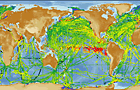 |
The Surface Ocean CO2 Atlas (SOCAT) SOCAT brings together, in a common format, all publicly available surface water data from the global oceans, including the Arctic, and the coastal seas. All data are evaluated for data quality using methods that are transparent and fully documented on SOCAT website. |
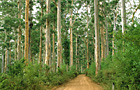 |
A Large and Persistent Carbon Sink in the World's Forests The terrestrial carbon sink is large but its size and location remain uncertain. Using forest inventory data and long-term ecosystem carbon studies, a new study estimates a total forest sink of 2.4±0.4 Pg C yr-1 globally for 1990-2007, - equivalent to one third of current annual fossil fuel emissions. |
 |
Current and Future CO2 Emissions from Drained Peatlands in Southeast Asia |
 |
Gas Hydrates: Entrance to a Methane Age
or Climate Threat? Methane hydrates are a potentially vast fossil fuel energy source that could provide up to 10% to 15% of global natural gas production within the next two decades. At the same time, hydrates extraction for energy use and potential hydrate destabilization due to global warming could lead to the release of large emissions further providing an acceleration of climate change. |
 |
Soil Organic Carbon Pools in the Northern Circumpolar
Permafrost Region The vast amount of carbon stored in the Arctic and boreal regions of the world is more than double that previously estimated, according to a study published this week. The new estimate is over 1.5 trillion tons of frozen carbon, about twice as much carbon as contained in the atmosphere. |
 |
The Carbon Balance of Terrestrial Ecosystems in China During the 1980s and 1990s, China showed a net carbon sink of 0.19–0.26 Pg carbon (PgC), which is smaller than that in the conterminous United States but comparable to that in geographic Europe. Northeast China is a net source of CO2 to the atmosphere owing to overharvesting and degradation of forests. By contrast, southern China accounts for more than 65 per cent of the carbon sink, which can be attributed to regional climate change, large-scale plantation programmes and shrub recovery. Contact authors: ShiLong Piao, Philippe Ciais Press Release (pdf, 38Kb); Presentation (ppt, 5Mb); Download paper |
 - Greenhouse gas Observing SATellite_thumb.JPG) |
"Ibuki" - Greenhouse Gases Observing Satellite (GOSAT) The Japan Aerospace Exploration Agency(JAXA) confirmed on 24-1-09 that the Greenhouse Gases Observing Satellite "IBUKI" (GOSAT) is now ready for the initial functional verification operation after shifting its attitude control system to the regular mode. The IBUKI was launched at 12:54 p.m. on January 23, 2009 (JST.) see also http://www.jaxa.jp/projects/sat/gosat/index_e.html |
 |
CARBOSCOPE - Global Sources/Sinks CarboScope is an exploring tool for CO2 and CH4 developed within the framework of the ICOS project. It provides general information on these two greenhouse gases and the scientific methods used to estimate CO2 and CH4 surface fluxes (atmospheric inversion). Carboscope provides a user friendly interface to compare CO2 and CH4 fluxes from different european contributors. |
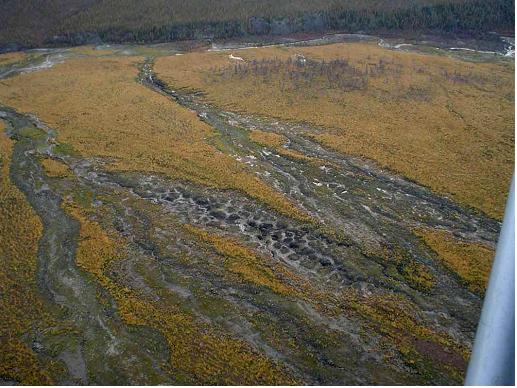 |
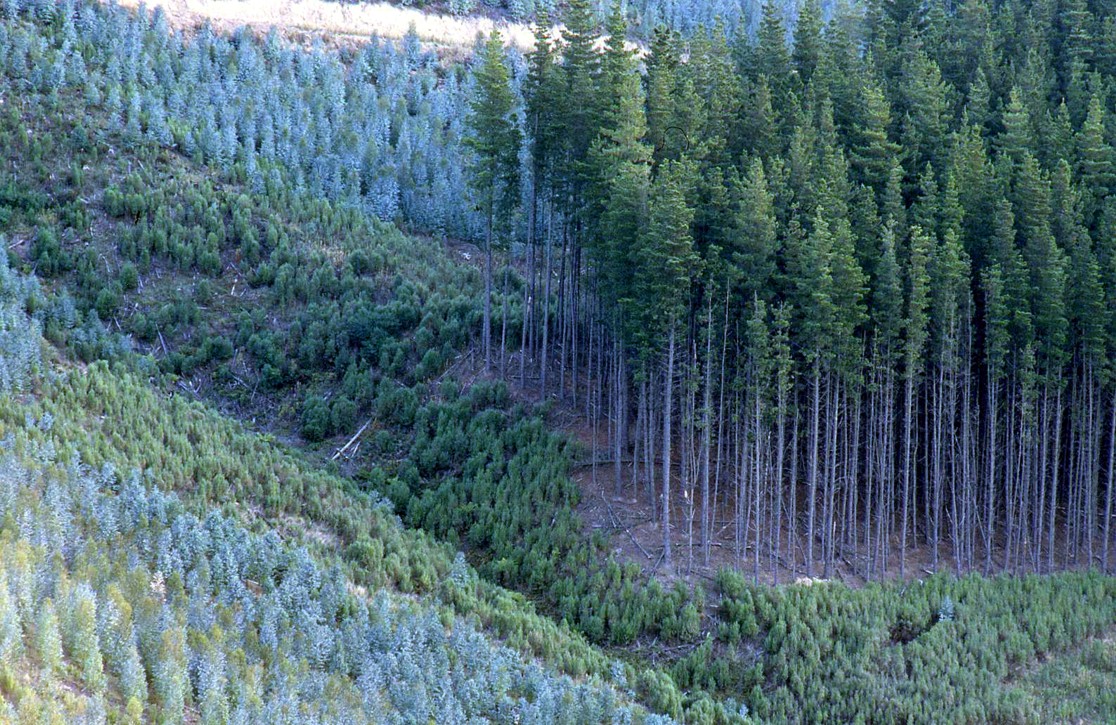
Vulnerability of Permafrost to Climate Change |
 |
Managing Forests for Climate Change Mitigation |
 |
Carbon Sink Capacity in Northern Forests Reduced |
 |
Accelerating Atmospheric CO2 Growth This study finds that the recent swift increase in atmospheric CO2 is due to faster economic growth coupled with a halt in carbon intensity reductions, in addition to natural sinks removing a smaller proportion of emissions from the air. Efficiency of natural sinks to remove emissions from human activities has been declining for 50 years. |
 |
Drivers of
Accelerating CO2 Emissions |
 |
Saturation of the Southern Ocean CO2 Sink |
 |
Tropical Forests and Climate Policy
A tropical forests and climate policy study in the journal Science highlights the importance of slowing deforestation in tropical countries in the global effort to avert dangerous climate change. |
